Sunday, 16 September 2012

The Hillsborough Disaster

The Hillsborough Disaster and the power of the Media.

 After watching a news clip about the resent revelations of the Hillsborough Disaster, the class discussed just how powerful the media can be.
 Whatever the papers or the news tell us, we believe, and they can use this to show things in a certain light so that we feel a particular way about something. I am in complete awe and shock as to how much this can actually influence a large body of people. It is truly amazing, but also truly terrifying.

Review of Blogs

Reviews and Feedback of Blogs

 We started the lesson off by looking at everyone's blogs, and discussing some areas for improvement/ideas for what to do next.

 I have begun incorporating digitally drawn tables and scanned in mind maps straight from lessons. I have also briefly begun writing up about my own personal thoughts on my own personal media interests (eg. 'The Road' post). I would now like to consider using a voice recording or video clip to document some of the lesson when it seems fitting with the topic to do so.

Gender Representation through Sound


How the Roles of Different Genders are Represented in the Media via the use of Diegetic and Non-Diegetic Sound

WIP

Music and sound have a massive impact on the media, and the use of different instruments in accompaniment can change the emotions of a scene/clip:

Piano- Romantic, love, sadness, melancholy.
Trumpets- Heroic, triumph, when slow can be associated with remembrance.
Saxophone(Blues)- Lonely, solitary, soulful.
Drums- Danger, drama, excitement, purpose, creates pace, can sometimes represent a heartbeat.
Violin (Slow/Legato)- Calm, serenity, peace, love, sadness, melancholy.
Violin (Fast/Staccato)- Fear, drama, panic, tension.
Bells- Celebratory associations.

Leitmotif- A musical motif or phrase that is often repeated to represent/symbolise a character and/or their role, mostly distinguishable via the use of instruments.

eg.

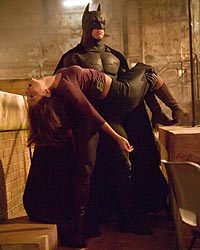
In 'Batman', we recognise the deep drums and trumpets to signify the presence of the protagonist, Batman. The music is powerful and heroic, as well as grungey and dark, much like the main character:


Contrastingly, when Selina Kyle, also referred to as 'Catwoman' is on screen, a delicate piano and dramatic and deep violin can be heard, a gentle feminine tune, but with a dark and cunning edge, again reflecting her character. This is first heard in her personal 'theme song', however it appears repeatedly throughout 'The Dark Knight Rises' due to her presence:


 On the third watch of the clip, we took notes on and discussed diegetic and non-diegetic sound:


 Again, we had ten minutes to write a paragraph based on some of the ideas from our mind map:

 "During the last section of the clip...

My feedback: 
Explanation and Argument- 3/5
Examples- 4/5
Terminology- 5/5

"Very good examples of how each sound creates emotion. Focus more on the masculinity and femininity."

Overall feedback:
Explanation and Argument- 12/15
Examples- 11/15
Terminology- 13/15

My strength seems to lie in my use of terminology. To make my writing better, I will focus more using more and better examples whilst simultaneously linking these with the overall argument.

Gender Representation through Editing


How the Roles of Different Genders are Represented in the Media via the use of Editing


 We watched the clip a second time and in our groups discussed out ideas on the use of editing in correlation to the portrayal of gender:


 Again, we had ten minutes to write a few paragraphs based on some of the ideas from our mind maps:

"Masculinity and Femininity feature dominantly throughout the clip, and is shown resoundingly through the use of editing. Throughout the clip, juxtaposition is used to highlight the differences of many characters. At the beginning, the denotation is of two characters one male, the other female, both conforming to their gender's stereotypes. The connotations derived of the contrast of placing shots of the two characters together are multi-puposeful; the audience can not only more easily see the superiority of the seemingly reasonable man over the emotional woman through the editors choosing to juxtapose high angle shots looking down on her with low angle shots looking up at him.
 The latter scene of the man and woman in the forest is reminiscent of this, however, as their roles are subverted, so is the effect on the audience via the use of editing. Again, we see who is inferior to those with power, although this time it is the surprising contrast comparison of a strong willful woma, successfully carrying out masculine tasks (also echoed in the purposeful camera shots of action) to a victimised weak man."

My feedback: 
Explanation and Argument- 4/5
Examples- 4/5
Terminology- 4/5

"You understood really well and used lots of terminology, but maybe have a few more examples?"

Gender Representation through Camera Shots and Mise en Scene


How the Roles of Different Genders are Represented in the Media via the use of Camera Shots and Mise en Scene


 After watcing the new clip, in groups, we discussed some of the ways in which camera shots and mise en scene are used to portray gender:


 We then had to use these mind maps to devise a quick passage explaining some of these ideas:

 "Throughout the clip, the majority of the female characters are shown as minor characters as opposed to the more dominant males. The use of high angle shots is used regularly to this effect, highlighting the highly emotional and unreliable state of the woman in the opening scene and, more notably, the victimisation of the woman in the barn. The only female that subverts this role is the blonde woman in the leather jacket.
 Her short, bleached hair and dark leather clothing, reminiscent of many popular and iconic male figures and stereotypes (action heroes/ bikers etc.), portrays the connotations of what the audience will now assume to be her 'masculine' personality and attitude of strength, arrogance (stubborn) and willpower.
 This is also greatly added to by her gestures and movements; every action is clear and purposeful, giving her a 'get the job done' attitude, often portrayed in conformative male characters. She is also shown in settings of masculine power: she is the one operating the digger, not her male companion of whom later becomes a victim and required her to become his saviour, she then conforms to the idea of a male hero, a 'knight in shining armour', as well as later wielding a gun along with a male protagonist, leaving another man unarmed in comparison."

 We swapped with someone in the group and then marked each others work.

My feedback: 
Explanations and Argument- 5/5
Examples- 3/5
Terminology- 4/5

"Good argument, could use more quotes."


Friday, 14 September 2012

'The Road'

 I watched 'The Road' the other night, and it is honestly one of the best things I have ever seen; it is also the saddest, most harrowing but the most beautiful film I have had the honor of witnessing, and is also one of the truest book adaptations I have come across.
 One thing that I kept noticing throughout the film was the use of grading. The colours are all extremely washed out, adding to the already drastically bleak setting. Mid greys and browns are used recurringly throughout, meaning that when fire or blood is shown in shot, it is a sudden and surprising contrast to what we have become used to as the colour palette, shocking the audience of whom would have considered any warm colours to be a welcome change, but the darker meaning and reason for their presence seemingly much darker than the original colours themselves.


The soundtrack is also absolutely stunning and fits amazingly with the film itself:

Class and Social Standing

The use of Class and Social Standing in the Media


 After discussing the various stereotypical features of the different classes, we then, in our pairs, discussed how we might portray a 'typical' working class male using mise en scene and camera shots.
 Me and Rosie decided to further specify our character's personality by basing him on what is often referred to in the media as a 'common chav'. To depict this, we thought we would first set the scene with an establishing shot of a crime-stricken and generally grim looking estate. We would then cut to either a wide shot or a mid shot to show the characters clothing- tracksuit, trainers, cap etc. and mix this with close ups of various nody parts (hands, mouth...) to show him drinking, smoking, littering and other acts 'frowned upon' in public.